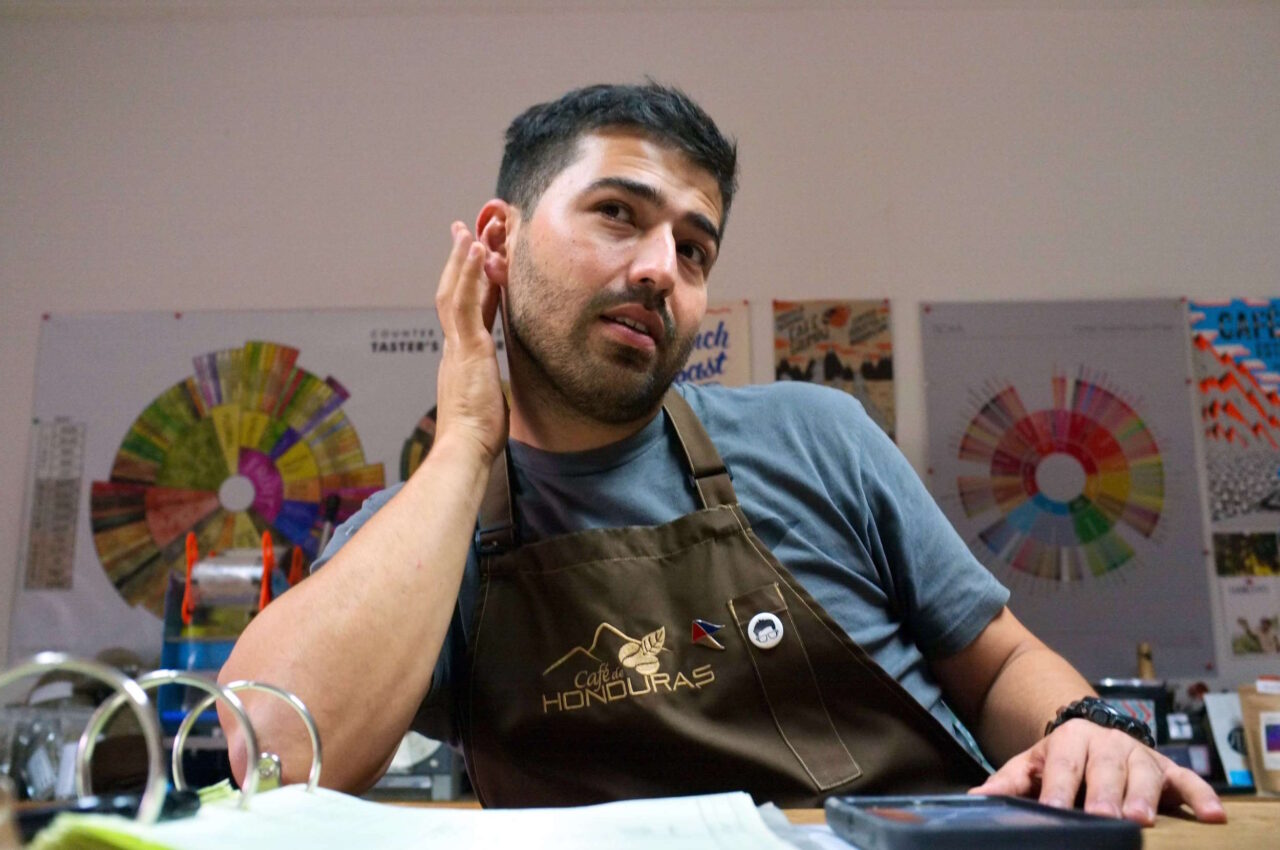
In this inaugural four-part series, Ben Carlson (co-founder of Long Miles Coffee) and Abby Fabre (manager of 7 Corners Coffee) talk to coffee producers from Central and South America. We hear from them how the global pandemic is affecting coffee production, the complexities of shifting to organic farming practices and what the specialty coffee industry should be doing to be more sustainable.
“This is the hardest year to sell coffee. Everybody is struggling. The reason we started this podcast was to talk to friends in other parts of the world who are also coffee producers and highlight their voices.” – Ben Carlson, Long Miles Coffee
The first episode is already out! Listen to Ben and Abby talk about Honduran Coffee with Benjamin Paz (Beneficio San Vicente) on Apple Podcasts, Spotify and Anchor. Check out the list of other listening platforms on our Anchor page where you can search for and listen to Long Miles Coffee Podcast. Look out for our second episode on 21 July 2020.
You’ll also be able to find a listening link to the podcast together with the show notes from each episode on our blog.
If you would like to listen to the Long Miles Coffee Podcast on a platform that is not currently listed, please let us know. You can contact Robyn-Leigh van Laren: robyn@longmilescoffee.com
Would you like to connect with Ben and Abby, or be featured on an upcoming episode? You can contact Ben Carlson: ben@longmilescoffee.com
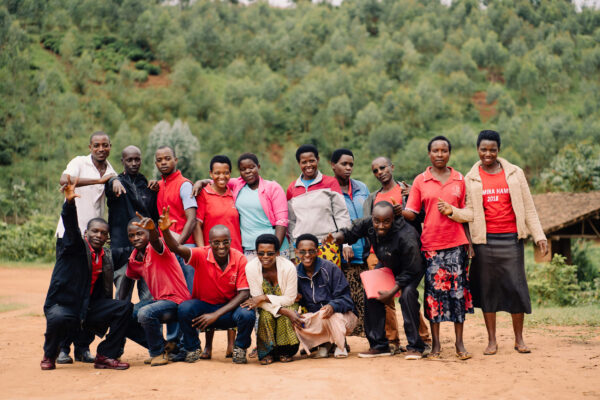
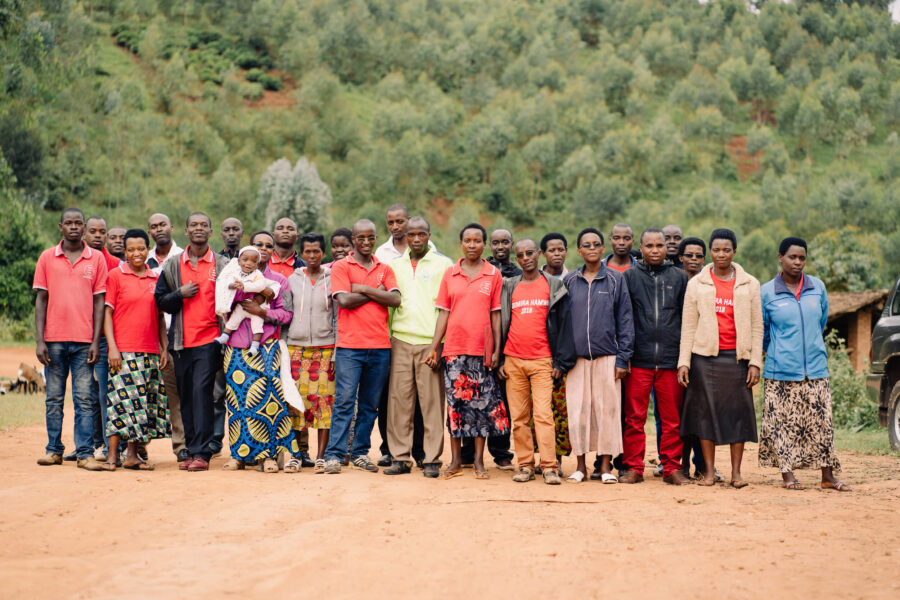
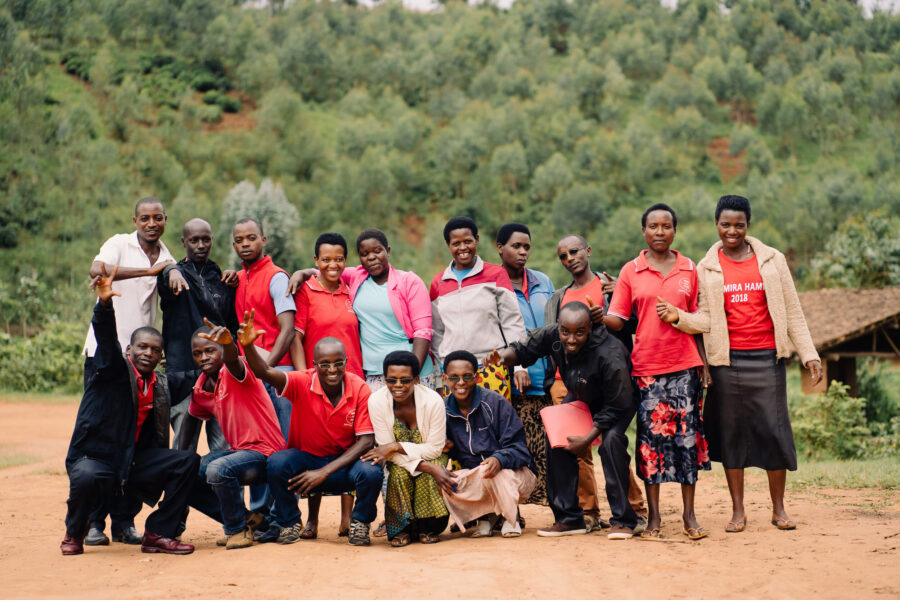
The Long Miles Coffee Scouts are grassroots community changers who take coffee quality very seriously. They are a team of twenty-six Burundians who live and work on the hills where coffee is grown. Under the leadership of Epaphras Ndikumana (Long Miles Social and Environmental Impact Leader), The Coffee Scouts come up with innovative and home-grown solutions to fight the threat of the potato taste defect, mitigate the effects of climate change on soil health and empower farmers with the tools they need to produce quality coffee.
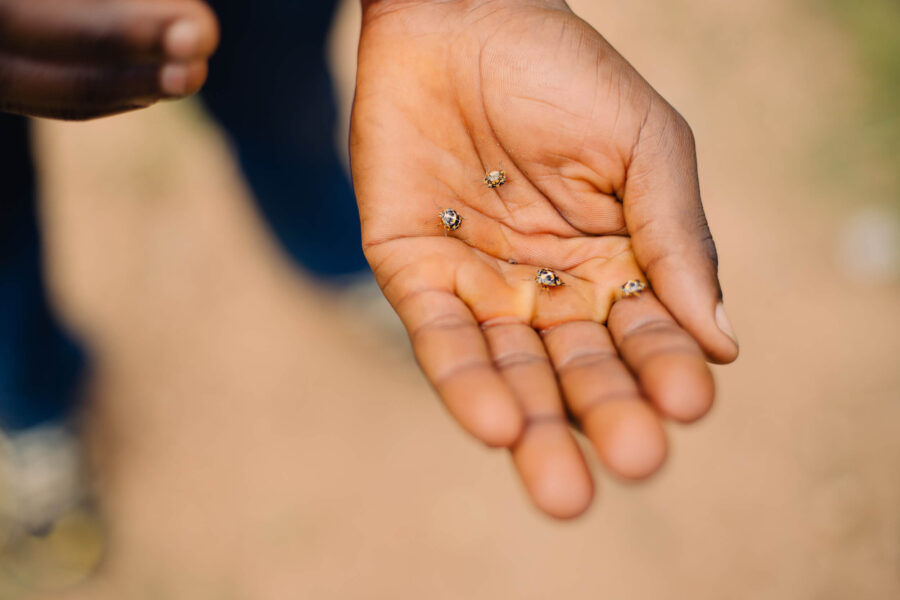
The Coffee Scouts got their name the day they left on their first mission, armed with spray bottles of organic pesticide to scout for antestia bugs, the colorful bugs linked to the potato taste defect, in neighboring coffee farms.
“The name ‘scout’ is used in Burundi to describe a group of people in the Catholic church. Most of the time, they are dynamic people who are ready to serve their neighbors, whoever they might be. I thought that we needed dynamic men and women like this, who are ready to serve the community of coffee growers; people who are ready to spend their time and energy accompanying coffee farmers in the trajectory of becoming specialty coffee producers. This is why we called the team ‘The Coffee Scouts’.” – Epaphras Ndikumana, Long Miles Social & Environmental Impact Leader
Since their inception in 2014, The Coffee Scouts have become a quintessential part of Long Miles, and have been pivotal in improving the quality of the coffee we produce at the farm level. They play a crucial role in bridging the gap between our washing stations and the neighboring coffee farming families who deliver their cherries to us.
Each Coffee Scout works with a group of farmer friends from the hill they work on, committing to help them understand and use better agricultural practices. Together with these farmers, The Coffee Scouts set up Farmer Field Schools which are small, model coffee farms. On these farms, anyone in the community can come to practice farming techniques, ask questions, and learn.
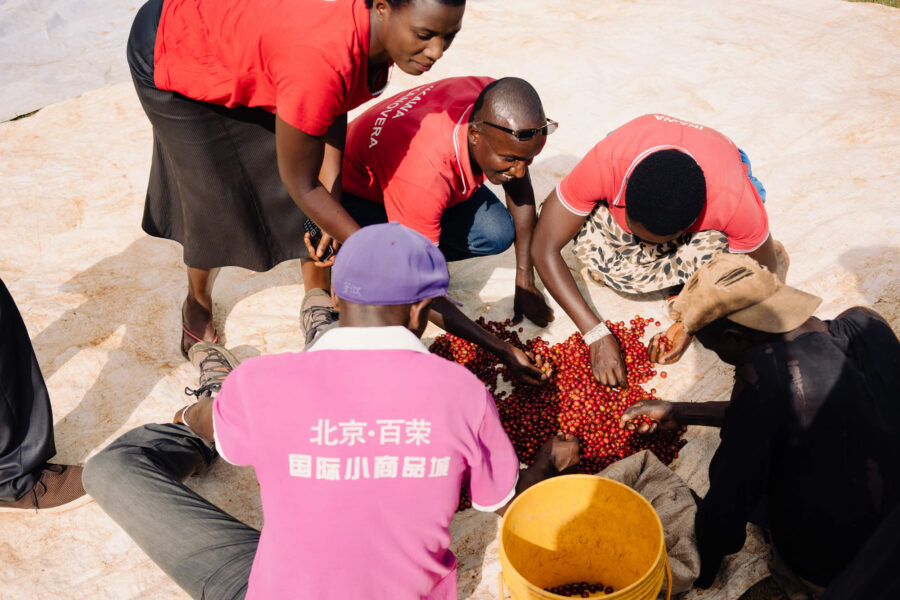
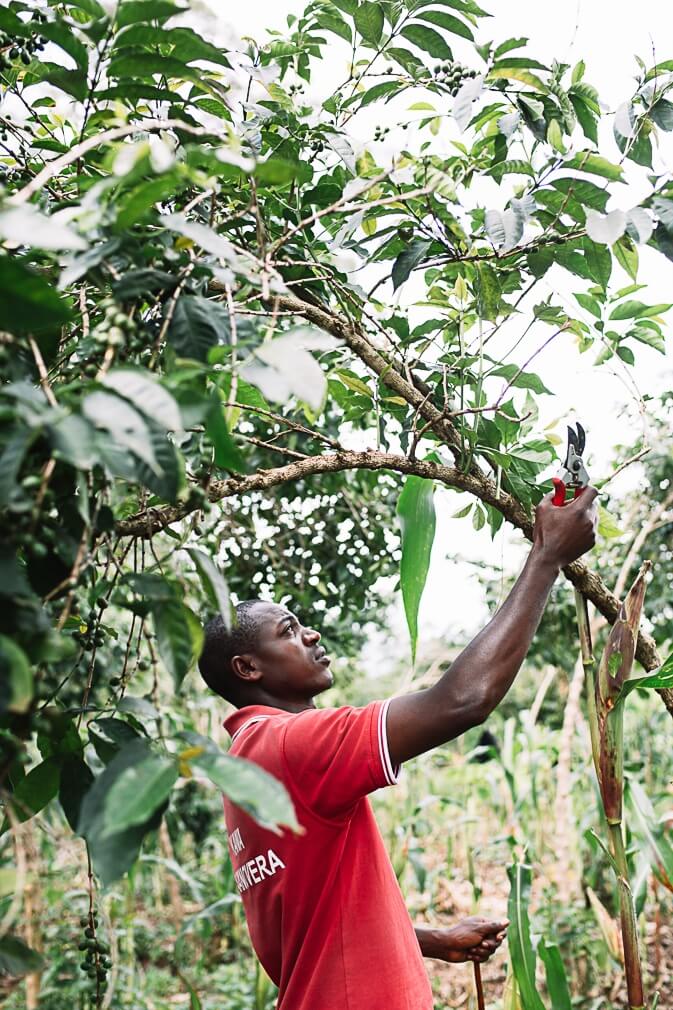
During coffee harvest, The Coffee Scouts can be found in the field, guiding farmers through selective cherry picking or at the washing stations, helping with farmer reception and coffee cherry quality control. You can’t miss them in their bright red t-shirts. Long after coffee harvest has ended, you’ll still find The Coffee Scouts in the hills teaching communities of coffee growers the importance of mulching and fertilizing the soil, seasonally pruning their coffee trees, growing green manures, planting and distributing indigenous shade trees, and preparing coffee seedling nurseries. And catching antestia bugs, of course.
While The Coffee Scout’s work is widely appreciated on the hills we collect coffee from, their job hasn’t come without challenges.
“At the beginning, it was hard for us to get farmers to follow what we were doing. People had never seen others running after insects trying to catch them. They thought that we were crazy! It was also difficult to build relationships with communities of coffee growers because we were new to the coffee sector.”
Back in 2014, the team was made up of just four junior agronomists working on two hills. Since those early days, The Coffee Scouts have expanded to a team of twenty-six (nine of which are women), working with coffee growing communities on twenty neighboring hills. Two of the founding Scouts have become the managers of Bukeye and Heza washing stations, with another two Scouts becoming washing station assistants.
“Our vision is to scale the team, not just for Long Miles Coffee in Burundi but on an East African Community level. The valuable contribution of The Coffee Scouts, both in empowering coffee growers and increasing the quality of coffee they produce, needs to be known and recognized worldwide.” – Epaphras Ndikumana
The Coffee Scouts are continuously growing as leaders and mobilizers in their communities. Their innovation and positivity is the beginning of a better future being realized for generations of coffee farmers in Burundi.
collected and translated by Joy Mavugo in conjunction with Robyn-Leigh van Laren from the Long Miles Story team.
On Thursday, 18 June 2020 the newly elected president Evariste NDAYISHIMIYE was sworn into office, two months before the official inauguration ceremony was planned and a week before the burial of late president H.E Pierre NKURUNZIZA. We asked some people how they were feeling about the unprecedented and significant changes happening in the country at this time.
“I knew that the ceremony was supposed to be in August. I don’t know why it was decided to have it earlier, but what’s important is that everything happened peacefully. It seemed strange to me, because it’s the first time to see a big ceremony happen in Burundi while the body of important leader of the country is still in the morgue.” – Samuel is a coffee farmer from Gitwe hill.
“It makes sense that the ceremony happened before the scheduled time, because there was no president in the country. In Kirundi, we say “Igihugu nti gipfakara” which means “The country can’t be a widower”. It’s good that the new president has stepped in. I was happy about the ceremony, and I’m happy for the new president. I’m waiting to see the changes that he will bring.” – Tharcisse is a coffee farmer from Nkonge hill.
“I was happy that day, because Burundi without a president is like an army without a commander. What amazes me is that during a time where there was no president in the country, there was no news to say that anyone had been killed. There was full peace. I wish that the new president will bring peace to the country, and bring back the people who have fled the country in the past.” – Gaslide from Gaharo hill
From the Field
written by Seth Nduwayo, Quality Control Manager for Long Miles Coffee
Now we have been processing coffee for about three months. This is a crucial period where a lot of attention has to be paid to how we process coffee. In fact, all we do at this stage will determine the quality of coffee we are going to produce. In other words, this is the most sensitive period to the quality of the coffee. This is where we as Long Miles do cherry selection, pulping, fermenting, grading, soaking, pre-drying, drying, moisture tracking, parchment storage… in a very monitored way, every day and seriously. As coffee can not wait at this stage, we will understand that, during this period, laborers have to work so hard. Life, during this period, follows the same pattern. But the reality is that it is hard, complex, demanding… overall, the busiest time of the season.
However, we are in transition to another period that is similar to production at stations, though there are some nuanced differences. These days, stations are sending a lot of samples to process, analyze, and send to the main lab in the States. After getting feedback from the main lab, then we know the order of lots loading, and how and what needs to be transferred at the Dry Mill. For the moment, we have some results from the lab and next week our first truck of parchment will land at BUDECA Dry Mill, in Gitega, the political center of Burundi. Then we shall start milling, probably early July. Simply put, dry milling consists of hulling, grading (by machine), color sorting, hand-picking, packaging, classification or taxation, and then documentation preparation that precedes green coffee exportation. This can bring many challenges: many companies may be submitting their milling program at the same time, power going off, forklifts breaking down, handpicking space lacking, bags marking being so slow… however, despite these possible challenges, my teammates and I are excited and ready to start milling as it is the final stage in getting our coffee in exportable condition and switching the story back to hearing from roasters.
written by David Stallings, Roaster Relations for Long Miles Coffee
Being coffee producers, there is never a lack of interesting information to share. In fact, this was a huge reason for wanting to start these updates. In everyday conversation with the team in Burundi, I would hear things that made me feel, “This should be shared with people in specialty coffee consuming countries!” While the header for my section is titled “[Notes] From the Lab,” I have, and will continue to, take the liberty to muse beyond the lab, as it were. In a sense, I feel that my role at Long Miles is to be the touchpoint between the work we do in Burundi and the people who roast and consume our coffees. Further, having been a green coffee buyer and also someone running coffee roasteries for many years prior to my time at Long Miles, I feel well-positioned to pull out topics of interest in order to shine a light on them. Topics that I hope those reading this section will find as interesting as I do.
Before working directly for a coffee producer, I thought I understood how critical the weather, rain in particular, was to a growing season. It turns out this is a topic that literally cannot be stressed enough. If you have been following along with these emails and/or our social media presence, you probably have some idea of just how much of a rollercoaster 2020 has been as it pertains to rain in Burundi. The year started out with seemingly unending, damaging rains. These rains caused landslides, ruined buildings, damaged crops that would have been eaten or have provided a household income for families, prevented the planting of the year’s second round of food staples, and more. The rains finally stopped a few weeks into the harvest season. This was a boon to the drying of our coffees. During the 2018 harvest, we were faced with the challenges of drying coffee amidst steady and continued rain. During rain you must cover the coffee on the drying beds with sheets of plastic. While this works fine for temporary afternoon showers, it is far from ideal for multi-day stretches. If covered for too long a host of issues can present themselves, from molds to the developing of a phenolic (chemical-like, think chlorine) taste in the cup.
It only took a few weeks for the great boon of dry weather to feel burdensome. During the Burundi harvest period, one can typically expect occasional showers. These showers help ripen the coffee fruit that remains on the trees. As the climate remained stubbornly dry we watched our coffee volume projections shrink for the year, just as we watched coffee begin to shrivel up on the tree. Without the necessary ripening rains the coffee cherries would turn from green to reddish-brown, never properly ripening.
I share all of this in order to set the stage for what I thought was quite an interesting anecdote I heard Seth Nduwayo and Epaphras Ndikumana (Long Miles’ Quality Control Manager, and Social and Environmental Impact Leader, respectively) discussing one day recently. They were commenting on the fact that there was so much coffee remaining on the trees, waiting for rain in order to ripen it, because the soil health is so poor. They told me that if certain fertilizers had been applied at the appropriate time, this would not be nearly as big of an issue. As much as my mind was with the tragedy of the coffee remaining on the trees, destined to never reach maturity, I could not help but find this fascinating.
Some very brief notes on inputs in Burundi: in recent years the government of Burundi has banned the importation of fertilizers, looking instead to promote a new state-built and run fertilizer company. The issue has been that the government has struggled to deliver fertilizer at the appropriate time of year, if at all. Inputs must be applied at the appropriate time, otherwise, their use is non-effective and quite literally a waste of money. While writing this weeks’ email update I visited the Wikipedia page Agriculture in Burundi, which very clearly lays out the issues in one sentence under the section Land: “Much of the land has suffered a loss of fertility because of soil erosion from poor agricultural practices, irregularity of rainfall, lack of fertilizer, and shortened fallow periods.”
There is good news, however, as there almost always is… over the past two weeks we have received periodic rains and have seen the deliveries to our washing stations hold steady in volume. Much of the cherry on the trees is properly ripening and we could not be more thrilled. While this harvest is not destined to hit the volumes we were hoping for back in February, it is certainly looking more positive than it was just a few weeks ago. We are grateful for this.
Secondly, while it may seem scary to talk about poor soil health, I firmly believe that the lack of inputs and low yields contribute to the exceptional quality we taste in the cup. This is a theme I have noticed time and again as a coffee buyer. It became most obvious for me back in 2015 while traveling in Kenya. In Kenya you see private estates growing coffee trees laden with fruit, owing in part to the plant genetics but also to the high level of chemical inputs. These private estates get 30, 35, even 45+ kilograms of coffee cherry per tree each harvest. Farms owned by smallholders delivering to cooperatives, on the other hand, would have straggly looking coffee trees producing 1.5 to 2 kilograms of coffee cherry per tree. Agronomists in Kenya are quick to point out the health of the abundantly producing, heavily fertilized trees as opposed to the relatively unhealthy smallholder trees. That said, it is my opinion that the best coffees in Kenya come from the cooperatives, whose members have relatively low yielding trees. Since this 2015 realization, I have applied this thought to various countries, varieties, and even harvests. Time and again I see it play out… lower-yielding is almost always more enjoyable in the cup.
Without question, this thinking presents a financial conundrum. There must be a balance between larger yields and quality in order to maximize income for producers. In all honesty, I only wish I could say that we, as an industry, are even close to working with producers to achieve said balance and find the optimum yield to quality ratio. In reality, this incredibly nascent specialty industry is still boot-strapping it – in a sense. Doing whatever it can to get by, while sticking to its purported goals. I merely share all these reflections as food for thought. Starts of conversations. Conversations which we hope to contribute to now and into the future.
I have certainly seen this maxim play out on my cupping lab the past couple of weeks. As I continue to taste through table samples from the harvest that is still underway, I continue to be blown away by the quality and qualities of Burundi coffee (produced from low yielding coffee trees in soil of relatively poor health). These are exceptional coffees and we cannot wait to share them with you all over the coming weeks and months!
On 20 May 2020, more than five million Burundians lined up to cast their vote in the country’s presidential elections. This was the first set of democratic elections to take place in almost 15 years. We asked some coffee farmers what their thoughts were on this:
“I heard people saying that there is a new president. I’m happy for him.”
Jeannine. 35 years old.
“I think the elections went well. I’m an old man who only needs peace, but for young people who need change it wasn’t the same case. Since voting day, the young people from the opposition party kept being badly beaten up by the young people from the ruling party. As parents, it hurts to see this. I believe that God will use the new president to make change. I don’t want to see Burundi going back to the bad times it went through.”
Thomas. 55 years old.
“The candidate that I voted for is not the one who won, but what is important is that until now there is peace in Burundi, and people are still doing their daily activities.”
Jean-Claude. 32 years old.
“I have bad memories of the last election, and this voting period scared me. In 1993, in less than 5 hours 15 of my family members, including my father, were killed. I was the only child left in the family. I appreciate how safe these elections were. I’m not surprised by the result, as I had put in my mind that the ruling part would be the winner in Burundi. Maybe our grandchildren will change things because I don’t believe that this generation will see political freedom.”
Leonidas. 34 years old.
“The election started well. During the campaigning period people were happy, but from the voting day things went bad. My brother who is a part of the opposition party was working in a polling station. People from the ruling party were there too and had a box of voting cards. They were voting for people who weren’t even there. When my brother stopped them, they beat him and he was taken to hospital. I’m not happy about the election results because the ruling party didn’t win; they stole it instead.”
Eduard.
“I’m waiting to see what new things the president will bring. I hope that he’s going to promote the coffee crop.”
Pronie.
“I don’t know many things about the elections. I only heard people saying that they went well. I went to a polling station at a nearby primary school. I don’t know who I voted for. The person who was working at the polling station told me to put my fingerprint in front of the eagle. There were many old people voting with me who were told to put their vote in front of that eagle too.”
collected and translated by Joy Mavugo in conjunction with Robyn-Leigh van Laren from the Story Team.
It’s been a hard week for Burundi. On Monday 8 June 2020, we heard the news that Burundi’s late president H.E Pierre NKURUNZIZA had very suddenly and unexpectedly passed away. Flags were lowered to half-mast and the country went into a week-long mourning period to remember the person who lead and governed Burundi for close to 15 years.
“When I first heard the news, I couldn’t accept what others were telling me. Two days before, the police stopped people on the road saying that the president was passing by. The second person who told me was my friend who said that the president had died from disease. I asked him: “Who told you that news? Is that disease CORONA?” He told me that he didn’t know. After realizing that it’s true, that the president died, the first question I asked is: “Who will give the presidential chair to his successor at the big ceremony in August?” Death is not afraid. Even if people call themselves great, only God will live forever.” – Céléstin from Mikuba hill.
“It was really scary news, because it happened just after the elections. Burundians, especially from the hill where I live, have bad memories of elections. When I heard the news, I didn’t even ask the cause of his death. Immediately, my heart told me that things will happen again like they did in 1993. I went home and started listening to the radio to hear what the situation is in the country. The good thing is that after his death, no other Burundians have lost their lives. Only…it’s still too early to believe. The lesson I’ve learnt from the president’s death is that there is no great person in the world. God is powerful, and he does what he wants on earth and heaven.” – Bénoit from Mikuba hill.
“When I heard the news, I was very surprised. At first, I didn’t believe what people were saying. I am now wondering: what will happen next? What makes me happy is that things are quiet in the country and there is peace. Nothing is impossible. Three days in the country without a president, and life is normal. The world has surprises in store for us.” – Noël from Mikuba hill
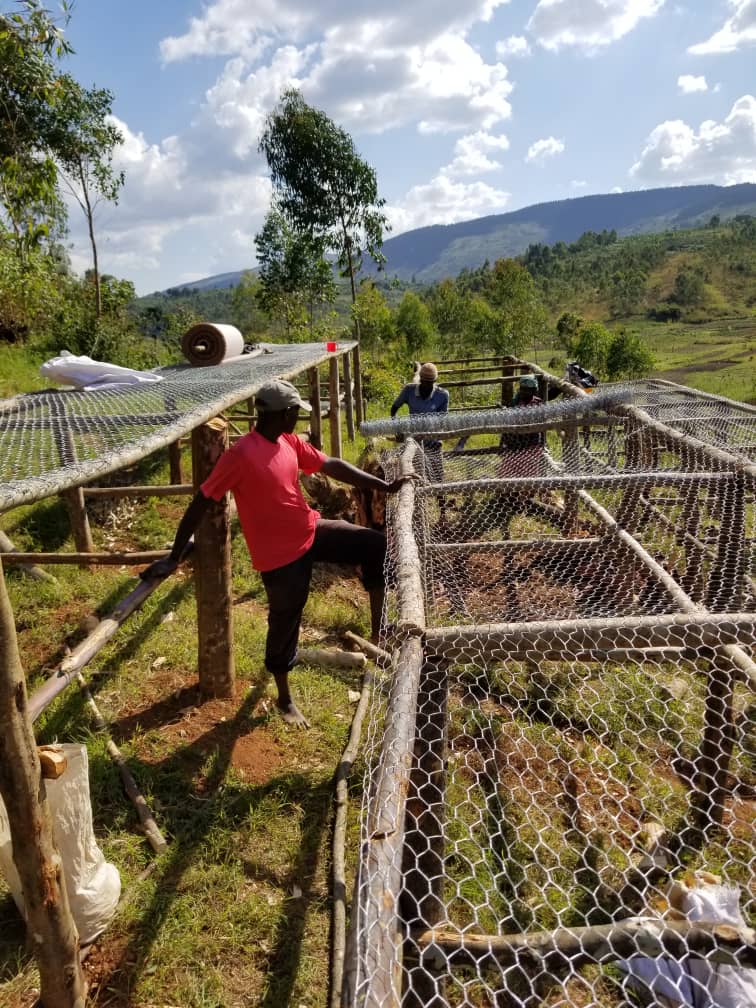
Constructing drying tables at the new Ninga Washing Station
From the Field
written by Seth Nduwayo, Quality Control Manager
Weather It would sound as if I have an endless repetition of climate stories. One can wonder, “isn’t there anything else more interesting you can be talking about?” However, this is to emphasize how severe and strange the climate is. So, when our partners hear that we have an Environmental Bottom Line among our four bottom lines, they find that it was not a mere choice of words. Rather, it is a real and serious challenge we have to face. While previously I shared with you the lack of rain that caused some berries to dry on the trees, before yesterday we got unexpectedly some rain in Bukeye and a lot of it at Heza, Kayanza. This is not bad as it will help some berries to ripen. However, for trees that didn’t have berries these will start blossoming. And as after this little rain sunny days are going to follow, then the blossoms may dry because they will have sprouted in a wrong period.
Ninga Washing Station I also spoke about how Ninga farmers are so happy that finally Ninga project is in course of implementation and they can deliver close, without the long walks. As Long Miles Team, we share the happiness with those farmers because Ninga has started to bear fruits. In fact, the first lots that were collected in Ninga and surrounding hills have been taken off the table, this week. Though I referred to our infrastructures at Ninga as basic, I believe that the quality of coffee that was processed there is at the same level or even higher than what is produced at our old stations. My fear is that the supply might be too much lower than the demand. However, we expect the next harvest to be good enough to satisfy all Ninga lovers in both quality and quantity.
A No-Visitor Harvest COVID-19, has changed the way humanity lives and works; the coffee industry was not spared. We used to host guests who came to visit our factories (Washing Stations). They came for various purposes but we enjoyed hosting them. Some were customers, others were interns, students who want to be at an origin, Cup of Excellence judges, etc. Personally, I really liked that they were coming. In fact, even when they may not buy our delicious coffees, at least they would tell a story about us or recommend their friends to partner with us. In this way, our reputation kept expanding, with many eyewitnesses. This year no more new visitors so far, except those following on Instagram or receiving our newsletters. I wish COVID ended so that we come back to normal.
Since the last Harvest Update email, I have received two boxes of table samples. Two more are currently en route; one has just made it to New York City the other is in Nairobi. The coffees I have tasted the past two weeks represent the first coffees delivered to our washing stations this season and, as such, are from quite small lots – some projected to be well less than one bag in size once milled.
Every single table sample produced will be coming through our East Coast lab [i.e. my basement] this year. This includes everything from our highest quality parchment, which is destined to become micro-lots, to our “Cherry-B” lots. (Cherry-B being the underripe and overripe cherries delivered by farmers. We are legally obliged to purchase these coffees from farmers but process them separately as to not lower the quality of our micro-lot coffees.)
The majority of my time over the next two months will be spent analyzing green coffee samples, roasting and cupping said samples, and constructing lots based on volumes, quality, flavor profile, hills, and demand. This is some of the most enjoyable and rewarding work I have the pleasure of doing. I could not be more thrilled to report that the table samples I have cupped thus far this season are of absolute stellar quality.
Beyond cup quality, the physical characteristics of the lots I have analyzed thus far have been quite reassuring. Every lot I have measured the water activity of has fallen between our desired 0.45-0.55 aw, with the majority of them being in the lower half of this range. Based on the quality of our landed lots from last year, this is exactly where we want our coffees sitting for optimal longevity and freshness.
Links worth checking out
Our friends at La Cabra recently shared a video shot by Paw Gissel during their 2018 visit to Burundi. Check it out here.
An interesting NPR piece on COVID-19 and Africa can be found here.
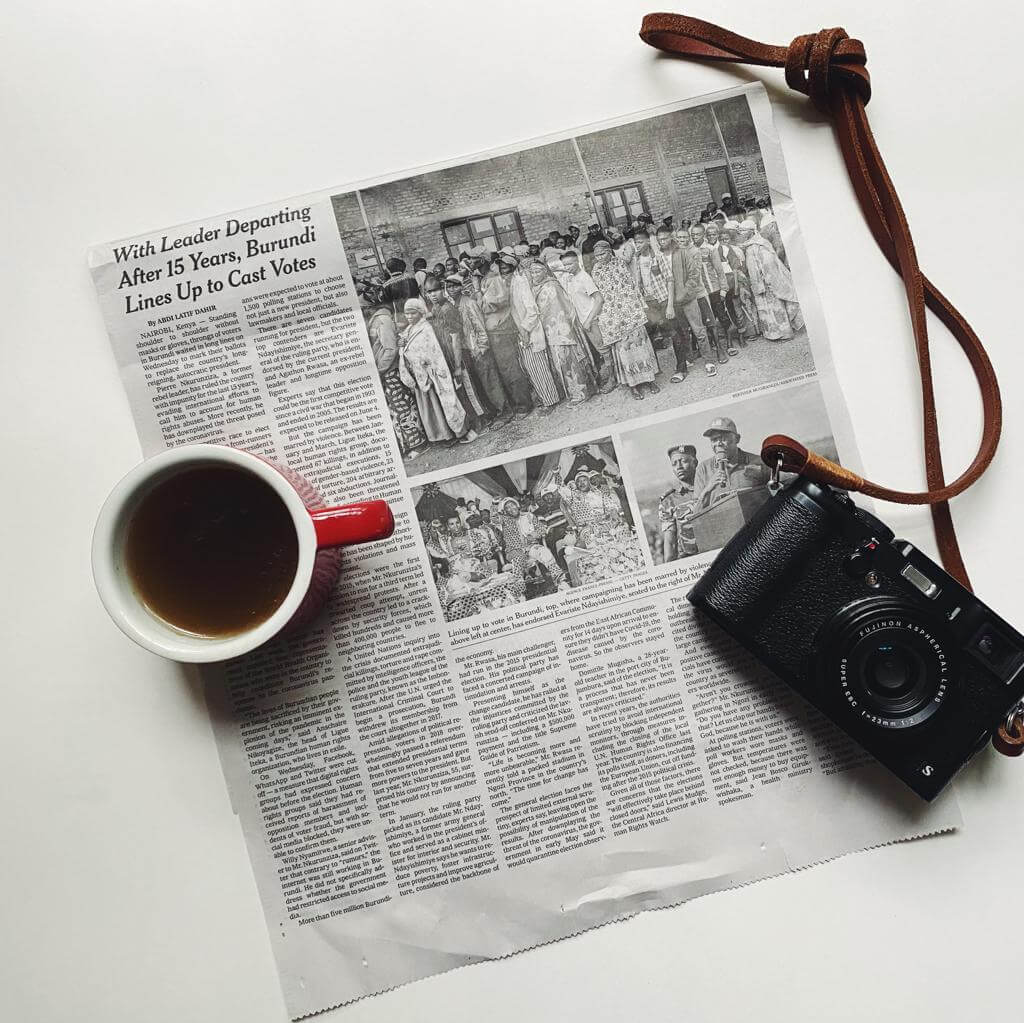
A New York Times article on the death of President Nkurunziza can be found here.
An Al Jazeera article on what happens in Burundi following the president’s passing can be found here.
We can’t help but think of COVID-19. It’s a very real part of everyday life that has affected everything, from how we operate as a team to how we’re producing coffee. As we opened our coffee harvest season and began to operate our washing stations, we had to think about how to go about producing coffee in a new way. How could we continue to produce coffee without putting people’s lives at risk? In Burundi, social distancing isn’t enforced and up until now, hasn’t officially been encouraged.
Thinking through how we can keep everyone safe is a big part of how we’re producing coffee this year. The main concern is for coffee farmers. The majority of the farming community are extremely vulnerable and an older population. We’ve had to build protocols for our washing stations and farmers that seem as foreign to our team as they did to us when we first heard them. Do you remember the first time you heard that we needed to socially distance ourselves and stand 6 feet apart? It’s an incredible challenge to tell people to stand apart at the washing stations when hundreds of farmers are delivering their coffee cherries at the same time. Coffee production is about space in so many ways. Usually everyone- from neighboring farmers bringing in coffee cherries to our team at the washing station- stands right on top of each other, selecting and sorting through coffee together. Lifting heavy bags of coffee cherries from one corner of the washing station to another. Producing coffee is a high touch, close proximity job. How do we change that? Culturally, it’s really difficult.
“We’ve had to build protocols for our washing stations and farmers that seem as foreign to our team as they did to us when we first heard them. Do you remember the first time you heard that we needed to socially distance ourselves and stand 6 feet apart?”
With 94 reported cases and 1 recorded death (as of 12 June 2020), COVID-19 is affecting Burundi. But…life has in some ways carried on as per usual, which has left many people feeling confused. There has been no lockdown or shutdown, no limitation on movement or travel within the country. Businesses and individuals alike are trying to follow what the country’s Ministry of Health and government is saying about COVID-19, but the reality is that there is extremely limited testing available and limited ability for the health care sector to handle a respiratory disease like this one.
In other ways, life has been turned on its head. All of the land borders have closed. The airport is shut until further notice- there are no commercial flights coming in or going out. Trading between our neighbors, both close and far, has been affected. No one is telling us, coffee producers, what to do or how to keep our team safe. That’s up to us. We’re having to think through: how do we operate to maintain safety for everyone involved while also respecting what the government is saying? We have to keep healthy as we keep producing coffee. We can’t stop the fact that the cherries are ripening and that harvest is happening. If roasters decide not to buy or roast coffee, we won’t stop producing it.
“No one is telling us, coffee producers, what to do or how to keep people safe. That’s up to us.”
In Burundi, coffee farming is ‘essential work’. Coffee makes up 70% of the country’s foreign exchange earnings. As farmers, it doesn’t matter that there’s a pandemic- you still have to harvest. This is also an election year in Burundi. As a country, we had to be able to stand on our own two feet and pay for the election, which is very costly. There are no fall backs. There is no health care or wealth care solution. Coffee is how most people live, and they can’t go a year without producing it. Burundi is also coming off the backend of the worst coffee harvests in decades. Last year (2019), the country as a whole produced just 20% of its usual coffee crop. We have to produce coffee as a country, as coffee producers, as families and individuals- we can’t afford not to. It will be a challenging year, but our vision to produce quality coffee and care for the farmers who grow it doesn’t change.
“There are no fall backs. There is no health care or wealth care solution. Coffee is how most people live, and they can’t go a year without producing it.”
Normal has gone out the window. Whatever the new normal is, we’ll just have to figure it out as it unfolds. We’ll still be producing coffee. We produced last year, we’ll produce this year, and we’ll be producing next year. We’ll still be planting indigenous trees, endeavoring alongside our neighbors and coffee farming families to renew the health of the soil on their land. Our roasting partners won’t be visiting our part of the world anytime soon. We’re thinking now more than ever: how can we partner with and support our specialty coffee community?
Whether it’s Africa, USA, Europe, Australia, Asia, wherever- we’re all experiencing this. We’re looking forward to figuring things out together, once this does pass. To our friends the world over, we’re with you.
words by Firmin, collected and translated by Joy Mavugo in conjunction with Robyn-Leigh van Laren from the Story Team.
On 20 May 2020, Burundi took to the polls to vote in the presidential election. This was a pivotal moment for the country as the last election like it, which took place in 2005, was wrought with controversy and violence.Firmin, a 52-year old coffee farmer from Mikuba hill, which is close to our Heza washing station, shares their thoughts on the elections.
“Everything went well on the day of the elections. I went to vote at a polling station set up at a primary school on Nkonge (a neighboring hill) around 11:00 am. I didn’t want to go any earlier because I was waiting to hear about the security of the situation. Up until now, I can say that the elections went well. People are at peace and still going about their everyday activities as usual. Whenever elections have happened in Burundi, I have felt insecure because it reminds me of the bad times we went through as a country after the 1993 elections.
Those who survived the violence in my family hid and lived in the bush for a month. There was one day when my father got drunk, made his way to our house and accidentally fell asleep there. He was killed that day, and all of his crops were thrown into a sewage pit.
It doesn’t really matter who wins the elections – whether the title of president is won fairly or not. What’s important is that there will be no more death on this hill. As someone who has already been through a terrible history of death caused by the elections, it is too early to tell if there will be peace. Violence only erupted three months after the 1993 elections. This time, I like to believe that there will be peace for longer.”
FROM THE FIELD
written by Seth Nduwayo, Quality Control Manager.
“In the first update I raised the issue of irregular rain. What I want to narrate today is its consequence. In fact, after the long days of extravagant rain, next followed long days of baking sun. This, then, causes the berries to dry on trees instead of ripening. However, what is a problem on the one hand becomes an advantage on the other hand. In fact, two weeks ago, we were complaining that we do not have enough drying tables because parchment delays on drying tables, because of rain but today at one of our washing stations, the half of lots that were drying have been taken off table (because of enough sun light).
I will also talk of Ninga Washing Station. Ninga is located 10 kilometers from Bukeye Washing Station. When Bukeye started, there were farmers who were members of a cooperative at Ninga who came to know Long Miles had opened a station at Bukeye. These cooperative members were interested in how Long Miles take care of the farmers they partner with (farmer education through coffee scouts programs, transparency, bonus, social projects…). So they decided to deliver their cherry to Bukeye, though it was far. When they were lucky, they rented a truck but it happened that cherry collection was banned. Then they started walking to Bukeye. However, it was not easy to reach Bukeye, not only because of the distance, but also because of threats from workers of another washing station they went past before reaching our station. Those workers were supported by some corrupt local leaders. As Ninga is a region with a lot of good coffee, Long Miles got a plan to build a Washing Station there. Then land was bought in 2017. We always thought Ninga could start in 2018 and Ninga farmers hoped to cut with the threats and long walking. But for many reasons, some financial, others related to coffee sector regulations and speculations, it is in this year that we will be able to set basic infrastructures that can allow us to receive farmers and dry some coffee on the land. So, farmers are very happy that the washing station they had been waiting for has just started slowly. For them, this is a victory as many challenges made them feel pessimistic while today, a candle of hope is shining in a room of darkness.”
FROM THE LAB
written by David Stallings, Roaster Relations
“The first round of samples from the 2020 harvest season are officially en route to our lab in the States. Currently “On Hold” in Bahrain, according to DHL’s tracking, to be exact. These samples represent the very first coffees to come off of our drying tables this season. Over the next eight to twelve weeks I will be tracking hundreds of samples as they pour into our lab, eager to do a complete physical analysis on them, roast them, cup them, and in turn, send them back out to roasters and importing partners the world over.
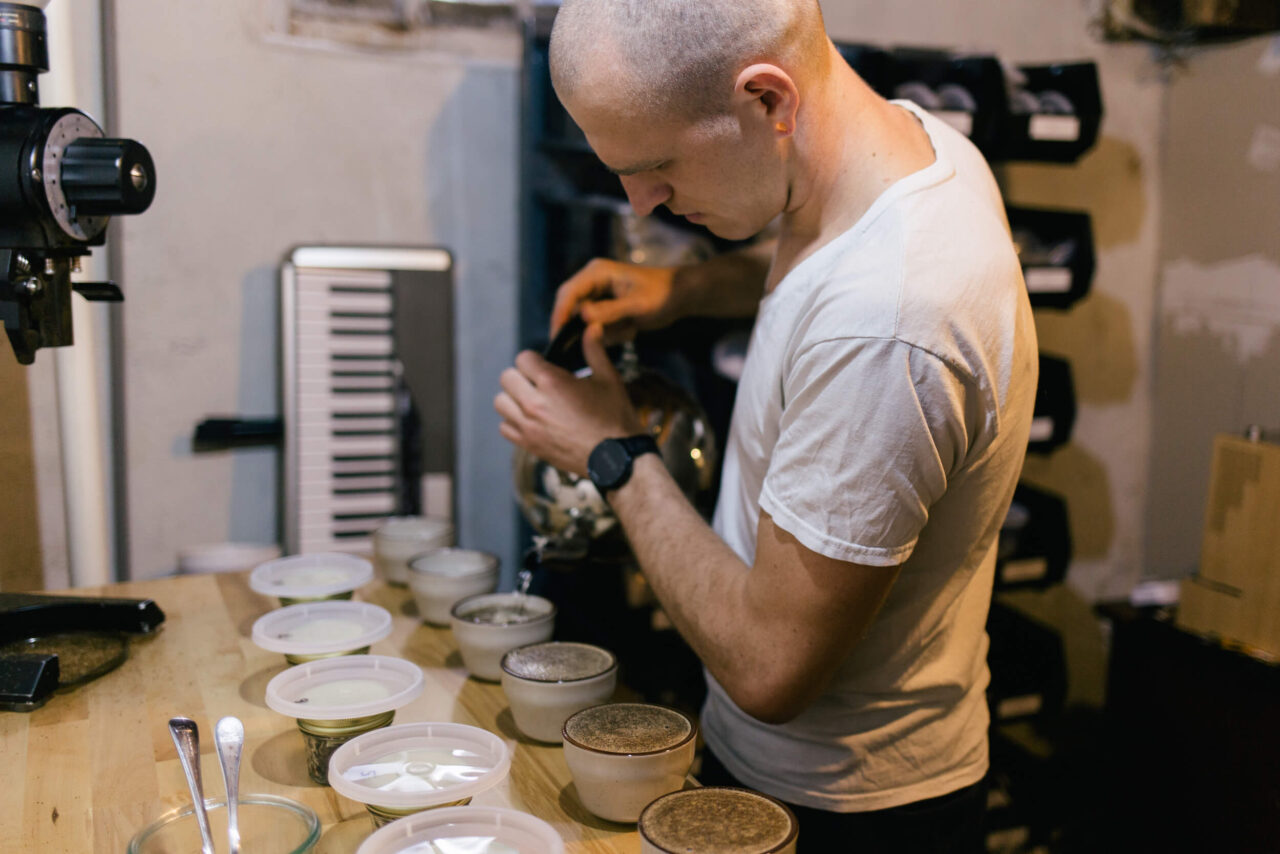
Admittedly, when I say “our lab” in the States, I am referring to a corner of my basement. Do not be mistaken, it is a well-outfitted corner. In it sits an Ikawa, a two-barrel Probat sample roaster, an EK43. Immediately upon moving into this house, three years ago, I installed what I deemed the necessary water treatment equipment to make sure I could cup and brew coffee I would be happy with. It is, without question, the basement of a coffee professional. But, a basement none-the-less.
But that is 2020. I do not know one person who is not “making do” right now, who is not parent, teacher, employee, employer, (and so much more) all wrapped into one. While we often wear these many hats, we are not accustomed to doing so simultaneously. The dramatic shift away from what I, and so many others, know to be normal has provided some excellent and much-needed perspective.
Just a few short weeks ago, for example, we believed that we were facing a harvest that would be comparable to the volumes we saw in 2017. As the days pass, one after another, without rain, we are realizing that some cherry on the tree is likely to not ripen. Though significantly better than last season, volumes will likely not be what we expected and certainly not what we had hoped for. Six months ago this would have been extremely jarring to me. But the world has taught me some measure of patience through the pandemic, some measure of understanding just how little control I have. As the old adage goes, it is not what happens but how we respond, and I am certain this year holds many wonderful responses from the team I am so lucky to work with.”
Links worth checking out
We wrote a letter to our friends at Onyx Coffee Lab about Coffee Production in the age of COVID. You can read it here.
Over the coming weeks, we plan to share updates from the ground in Burundi; updates from the farm, field and lab.
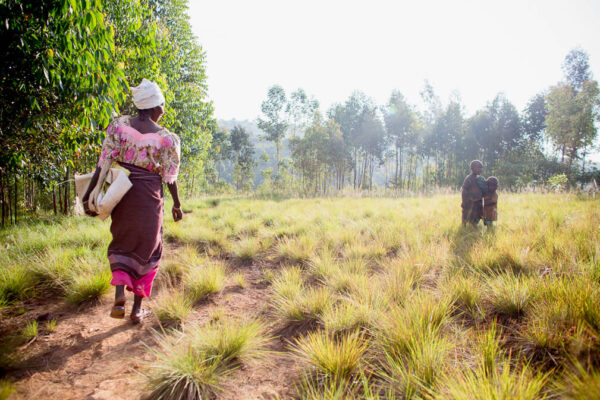
Emilliene, a coffee farmer from Nkonge hill, with their son
FROM THE FARM
words from Emilliene, collected and translated by Joy Mavugo in conjunction with Robyn-Leigh van Laren from the Story Team.
“This coffee harvest is going well -much better than last season but it has also been challenging. When you look at the coffee trees, there are so many cherries. But, there are a few things that I’m worried about. Firstly, there has been too much rain. It’s been destroying roads, houses, and so many other things in our community. Some of the coffee cherries are taking more time to ripen because of the rain. Since the start of harvest in April, I have only picked and delivered cherries to the washing station two times. The general elections are also coming up. I don’t like it when the elections happen in Burundi. In 1993, many of my family members, including my husband, were killed. When I think of the elections, all I can think of is the hard times we’ve had to go through since then.”
Seth Nduwayo, Quality Control Manager and Joy Mavugo, Story Assistant
FROM THE FIELD
written by Seth Nduwayo, Quality Control Manager.
“Today, I will talk about weather/climate. In fact, the climate in parts of Burundi where we are operating is unpredictable. We may be expecting a rainy period and this delays or vice versa. For example, at the end of August we had some rain and this caused the blossoming of coffee. Then, we thought that harvest will start as early as February instead of March. Still, we experienced some sunny days between January and February. However, February was very rainy- something we usually experience in April. As the cherries didn’t have enough sunlight, they ripened later and up until today, there are too many cherries in the plantations that are still green. This caused harvest to start later, on April 15th (a month later than expected). Most farmers affirm having a lot of cherries that will take long enough to ripen.”
FROM THE LAB
written by David Stallings, Roaster Relations.
“Along with concrete plans the world over, the current global pandemic has forced us to reimagine our lab situation for the 2020 Harvest. Long Miles was incredibly lucky to have the lionhearted Jordan Verdouw managing our Bujumbura lab for the 2019 Harvest. Jordan did an absolutely top-notch job screening coffees, providing cupping feedback to all members of our team, and also setting up systems for success in future harvests. While we had every intention to bring Jordan back into the Bujumbura lab for the 2020 season, the universe has decided to keep Jordan in his native Australia for the foreseeable future. When we realized we could not bank on travel restrictions lifting during the harvest, we shifted and decided to move the entire lab to the States. As samples come off the drying beds they will be dispatched weekly. From the East Coast of the States they will be analyzed (physically and sensorially). The biggest boon from this scenario is that samples should be getting to our roasting partners earlier than ever this year, as they will all leave from the States.”
Every year we hold our breath and hope as the Burundian government reviews applications to produce coffee. Producing coffee in Burundi is never a guarantee, which means that annually we need new permission granted only by the government in order to operate. There are always new hurdles to jump though in order to get a license and this year was no different.
As this season started, the government coffee board demanded that every coffee producer have the money needed to pay their farmers already in the bank; to be held in trust, before a single coffee cherry was delivered to the washing station. Last year’s coffee harvest was 25% of the normal export nationwide, which makes having these funds in advance unreasonable for most producers, including ourselves. On top of this law came the statement that if coffee producers were unable to comply, they would lose their washing station(s) along with any permission to produce coffee ever again in their lifetime.
We are no stranger to this kind of last-minute law building as coffee season starts, but scrambling to comply with these laws has made for a hard month. Add COVID-19 and its worldwide effects on top of this and we, possibly like you, have been surrounded by a thunderstorm of worries. Thankfully, we were able to find a way to comply with the government’s new laws and we began collecting coffee cherries last week. Friday’s daily report showed that 2,181.5 kilograms were delivered to our Bukeye washing station, so harvest is off to a nice slow start. Our other washing station, Heza, is at a higher elevation and is usually a few weeks behind Bukeye.
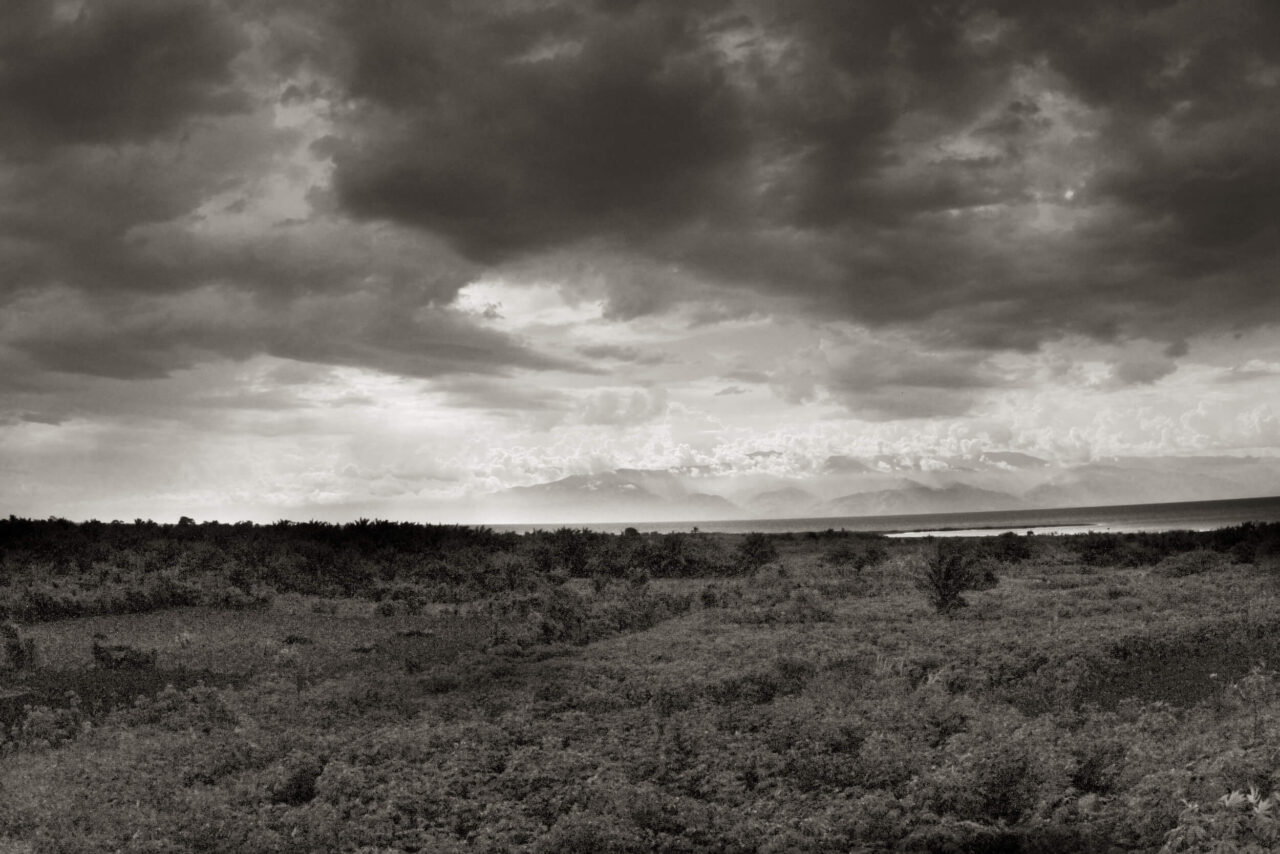
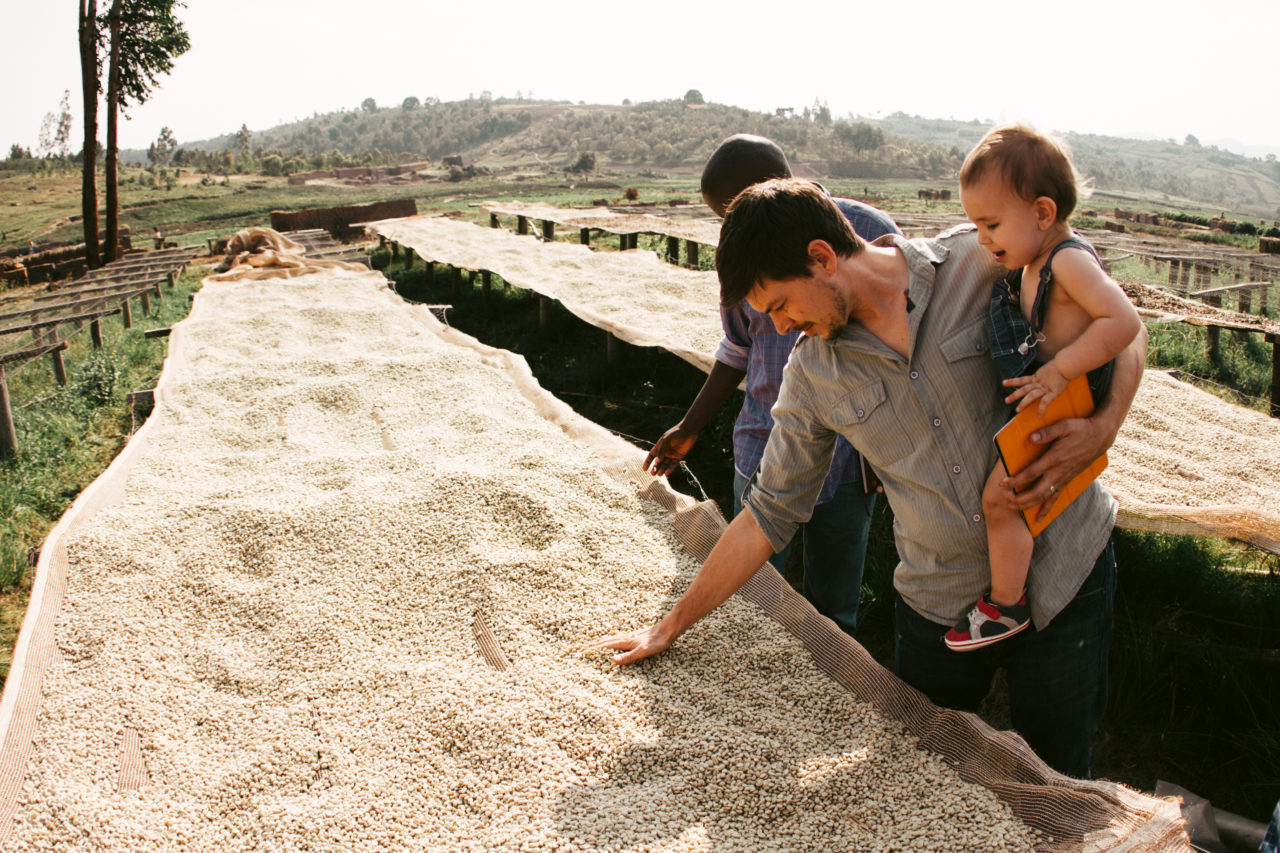
Image taken during coffee harvest in 2011, before Long Miles really began.
Recently while we were looking over our coffee-producing years, we realized that March Madness doesn’t just take place in basketball. March has, for the last six years, always held big challenges for us. Whether it’s a nation-wide fuel shortage, a coup d’état, a strangely low harvest or COVID-19, the start of harvest has always been marked by a challenge that feels larger than life.
As we all navigate this pandemic and its devastating challenges together, we’ve found hope in the coming harvest. Just like Spring coming or the sun setting, nature seems to hold a solidity that we all need right now. Harvest can’t be held back or rescheduled, the coffee cherries will ripen when they ripen. Production license or not, COVID-19 or not – harvest just comes. In a world that feels out of control, nature is a veiled reminder that stability will come again and that maybe, just maybe, normal life will too.